
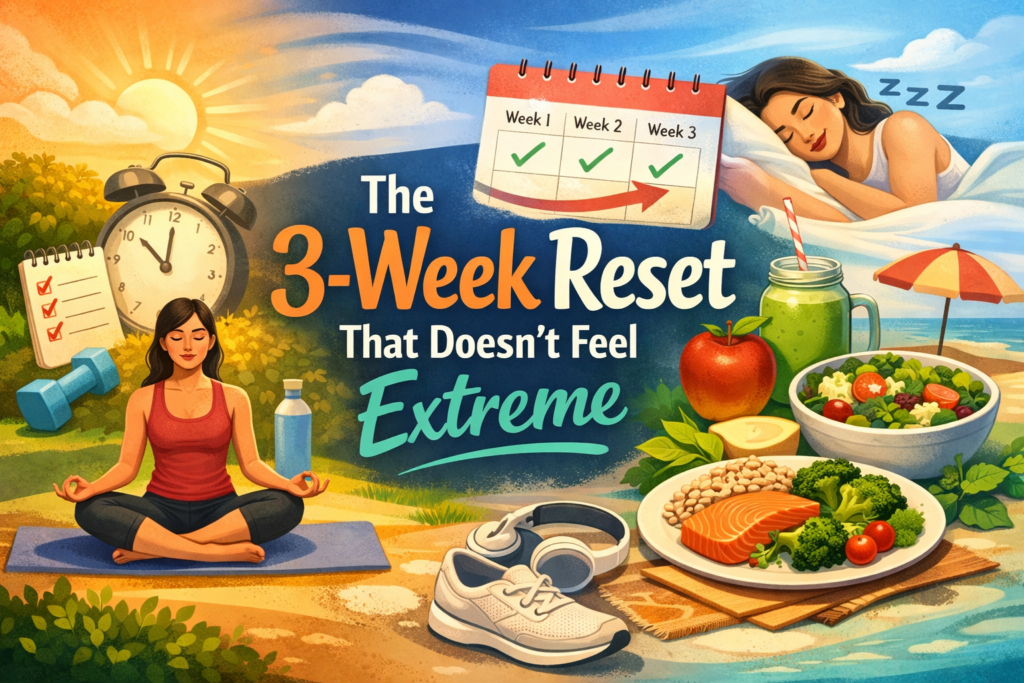
Why most “resets” fail before they start
A lot of wellness programs collapse because they ask you to become a different person overnight. You’re supposed to eat perfectly, train intensely, sleep like a champion, and stay motivated every single day. Then real life shows up. Work runs late, stress rises, social plans happen, and the plan breaks. When the plan breaks, people often assume they broke. That’s the moment the reset turns into guilt, and guilt rarely creates consistency.
I’m Marco Westhem, a wellness coach in Cincinnati, and I prefer a different approach: a reset that feels realistic. The goal is not to impress anyone. The goal is to feel better and build momentum. A good reset should reduce decision fatigue, stabilize your energy, and create habits you can keep after the reset ends. Three weeks is enough time to notice change, but short enough to commit without feeling trapped.
This reset is built around structure rather than strict rules. You’re creating a calmer rhythm for nutrition, movement, and recovery, so your body has the stability it needs to respond.
Week one: stabilize energy with simple structure
The first week isn’t about “getting shredded” or chasing perfect meals. It’s about creating a baseline. When your eating patterns are chaotic, cravings and energy swings feel chaotic too. That’s why the biggest win in week one is predictable meals. You’re not trying to eat less; you’re trying to eat in a way that makes your day feel steadier.
Most people do best with a basic rhythm: a real breakfast, a real lunch, and a real dinner, with one optional snack if needed. When meals are consistent, the urge to “make up for it later” fades. It becomes easier to make calm decisions, because your brain isn’t negotiating hunger and stress at the same time.
Movement in week one should support energy, not drain it. Think of it as “daily circulation.” Walking, light strength work, or short sessions that leave you feeling better afterward. The goal is to prove to yourself that you can show up consistently without needing a perfect schedule or a long workout window. When you move every day in a manageable way, your mood improves and your motivation becomes less fragile.
Recovery is the quiet hero this week. If you’re sleeping poorly, everything else feels harder. Choose one improvement you can actually keep, like a consistent bedtime window or a phone-free final twenty minutes. Small recovery changes compound fast when the rest of the reset is calm and structured.
Week two: build momentum through repeatable habits
By the second week, the reset starts to feel less like effort and more like rhythm. This is when you upgrade from “stabilize” to “build.” The focus becomes consistency with a little more intention: making meals slightly more balanced, improving hydration, and adding a bit of strength or structure to your movement.
This is also the week to pay attention to triggers. Most people don’t struggle with nutrition because they lack knowledge. They struggle because stress, fatigue, and emotional patterns hijack decision-making. Week two is about noticing those patterns without judgment. If evenings are your hardest time, you don’t need more willpower—you need a better plan for that time of day. If you tend to skip lunch and overeat later, you don’t need discipline—you need structure earlier in the day.
The best habit upgrades are the ones you’ll still do when you’re busy. That might mean repeating a simple breakfast most days, keeping a few reliable lunch options available, or planning dinner with “easy-mode” choices so you don’t rely on last-minute decisions. When habits become repeatable, your confidence rises. When confidence rises, you stop restarting.
Movement in week two should include something that makes you feel stronger. That doesn’t mean intensity. It means progression. A little more time, a little more structure, or slightly more challenge. Strength-building is one of the best tools for long-term wellness because it supports energy, posture, and self-trust. The real win is not the workout itself—it’s the identity shift that comes from keeping promises to yourself.
Week three: keep it sustainable and make it yours
The third week is where most people sabotage themselves, not because they’re failing, but because they feel tempted to “push harder.” This is the week where you might think, “I’m doing well, so I should tighten everything.” That’s how resets become extremes. Instead, week three is about sustainability. You’re practicing the version of the plan you can keep after the reset ends.
This is also the week to define what success looks like. For some people, success is better energy and fewer cravings. For others, it’s a calmer relationship with food and a routine that reduces stress. For others, it’s consistency with movement and sleep. A good reset is not measured only by a number on a scale. It’s measured by how your days feel and how stable your habits become.
If you want to carry the reset forward, choose the smallest set of habits that created the biggest benefit and protect them. Most people only need a few anchors: a meal rhythm that stabilizes energy, movement that supports mood, and a recovery routine that prevents burnout. When those anchors stay in place, progress continues naturally.
If you want help building a reset that fits your schedule and doesn’t fall apart when life gets busy, I can help. Wellness coaching should feel practical, supportive, and realistic. The best plan is the one you can live with—and the one you can keep.